
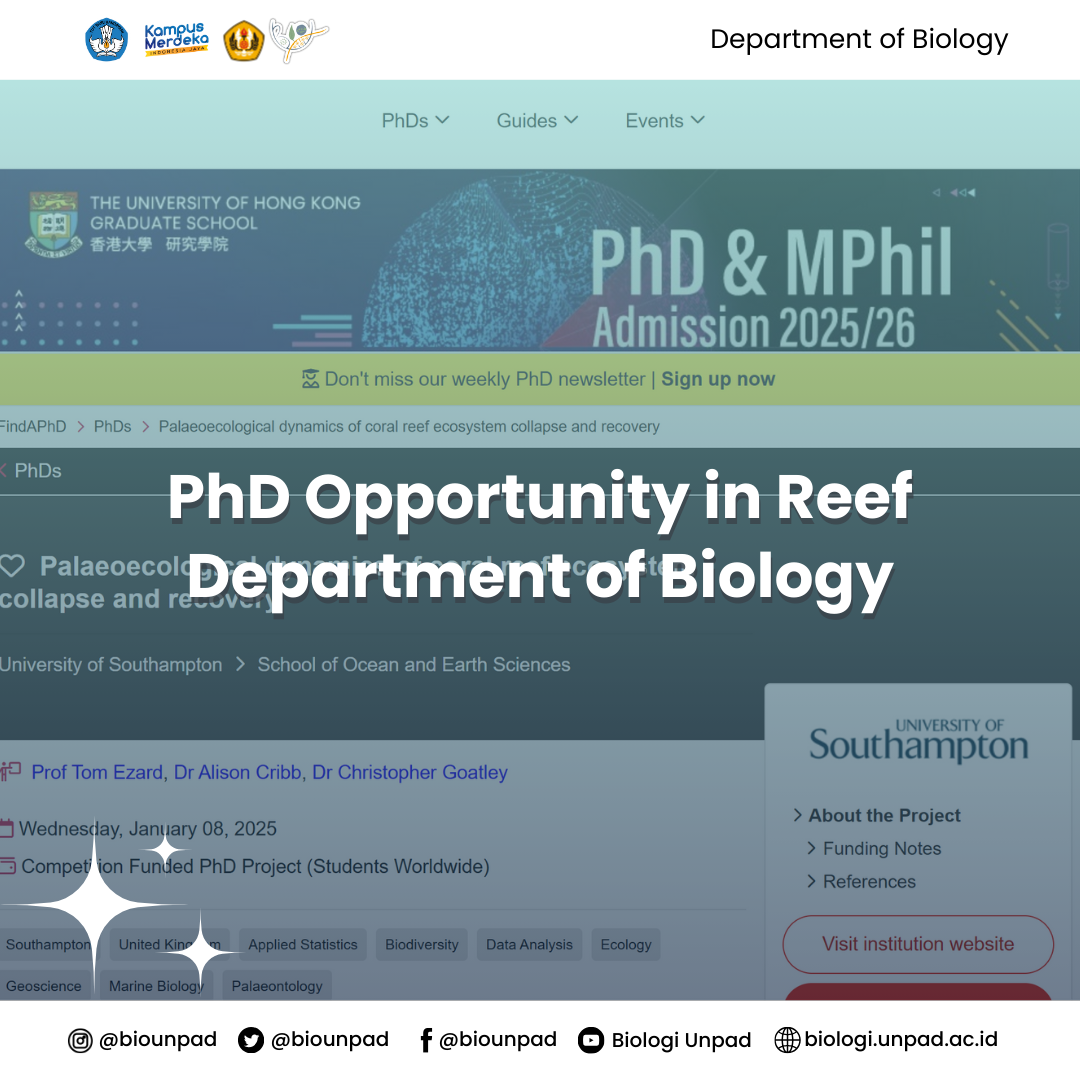
PhD Opportunity in Reef Palaeoecology at @OceanEarthUoS!
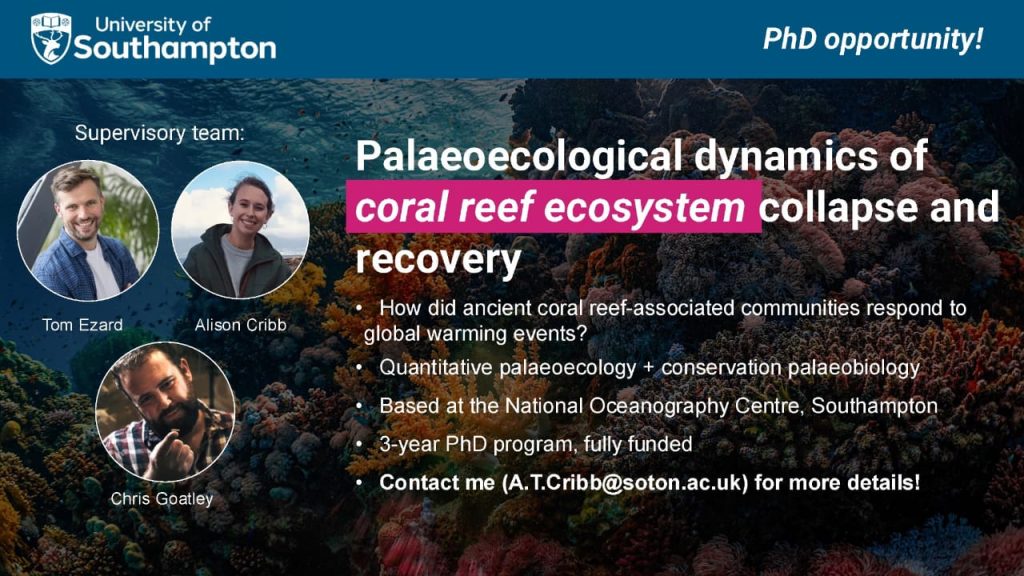
Interested in advancing your quantitative palaeoecology skills and investigating how fossil coral reef ecosystems responded to climate change? This PhD project at the University of Southampton focuses on understanding the dynamics of coral reef collapse and recovery, using fossil records to explore resilience during mass extinction events. Gain expertise in statistical palaeoecology, community ecology, and data management through hands-on research with global impact.
Coral reef ecosystems are experiencing extreme ecological changes under the stress of climate change, threatening some of the most important biodiversity hotspots on Earth. The fossil record during ancient climate change intervals holds clues into what the future holds for coral reefs under the threat of climate change. Coral reef ecosystems have undergone profound evolutionary and ecological changes over hundreds of millions of years, including the shift from extinct tabulate and rugose corals to modern scleractinian corals, and spanning numerous crises and recoveries associated with climate change. However, less well understood are the ecological and evolutionary responses of the reef-associated communities as corals respond to climate-driven stress. This project aims to apply cutting-edge methods from statistical palaeoecology, evolutionary ecology, and conservation palaeobiology to the fossil record of coral reef ecosystems to understand how reef-associated communities respond to and recover from ancient climate change events.
The successful student on this project will have the opportunity to address and develop a range of questions related to the palaeoecology of coral reef ecosystems using the fossil record. Some questions may include, but are not limited to: What factors trigger coral reef ecosystem collapse? What are the patterns of coral reef ecosystem recovery? How has the structure of coral reef ecosystems changed over time? Ultimately, the successful student on this project will build an important quantitative understanding of how these interconnected dynamics can help inform the future of life in our oceans.
Requirements: A UK bachelor’s degree with upper second-class honours or higher in a relevant subject. See international equivalent qualifications on our website. English language: IELTS 6.5 overall, with a minimum of 6.0 in all components. We accept other English language tests.
How to apply: Please enter the project title and lead supervisor’s name in Section 2 to state which project you would like to apply for.It is essential for overseas applicants to contact the lead supervisor to discuss the project before applying.









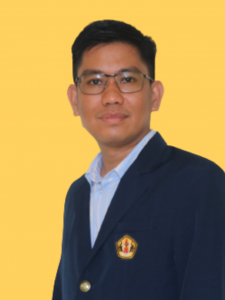


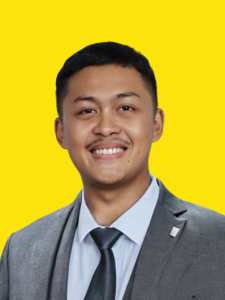
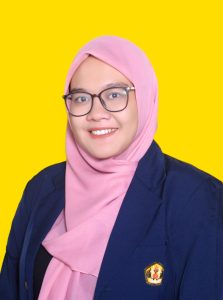
![[Biodata]](https://biologi.unpad.ac.id/wp-content/uploads/2023/10/Prof-Johan.jpg)
![[Biodata]](https://biologi.unpad.ac.id/wp-content/uploads/2023/10/S2-Prof-Erri.jpg)
![[Biodata]](https://biologi.unpad.ac.id/wp-content/uploads/2023/10/S2-Prof-Wawan.jpg)
![[Biodata]](https://biologi.unpad.ac.id/wp-content/uploads/2023/10/S2-Prof-Nia.jpg)
![[Biodata]](https://biologi.unpad.ac.id/wp-content/uploads/2023/10/S2-Prof-Ratu.jpg)
![[Biodata]](https://biologi.unpad.ac.id/wp-content/uploads/2023/10/S2-Prof-Sunardi.jpg)
![[Biodata]](https://biologi.unpad.ac.id/wp-content/uploads/2023/10/S2-Pak-Budi.jpg)
![[Biodata]](https://biologi.unpad.ac.id/wp-content/uploads/2023/10/S2-Bu-Desak.jpg)
![[Biodata]](https://biologi.unpad.ac.id/wp-content/uploads/2023/10/S2-Bu-Tia.jpg)
![[Biodata]](https://biologi.unpad.ac.id/wp-content/uploads/2023/10/S2-Pak-Teguh.jpg)
![[Biodata]](https://biologi.unpad.ac.id/wp-content/uploads/2023/10/S2-Bu-Asri.jpg)
![[Biodata]](https://biologi.unpad.ac.id/wp-content/uploads/2023/10/S2-Bu-Tri-Dewi.jpg)
![[Biodata]](https://biologi.unpad.ac.id/wp-content/uploads/2023/10/S2-Bu-Mia.jpg)
![[Biodata]](https://biologi.unpad.ac.id/wp-content/uploads/2023/10/Bu-Melanie.jpg)
![[Biodata]](https://biologi.unpad.ac.id/wp-content/uploads/2023/10/Pak-nurzaman.jpg)
![[Biodata]](https://biologi.unpad.ac.id/wp-content/uploads/2023/10/Bu-Nining.jpg)
![[Biodata]](https://biologi.unpad.ac.id/wp-content/uploads/2023/10/Bu-Annisa.jpg)
![[Biodata]](https://biologi.unpad.ac.id/wp-content/uploads/2023/10/Pak-Asep.jpg)
![[Biodata]](https://biologi.unpad.ac.id/wp-content/uploads/2023/10/Bu-Keukeu.jpg)
![[Biodata]](https://biologi.unpad.ac.id/wp-content/uploads/2023/10/Bu-Nurul.jpg)
![[Biodata]](https://biologi.unpad.ac.id/wp-content/uploads/2023/10/Bu-Susanti.jpg)
![[Biodata]](https://biologi.unpad.ac.id/wp-content/uploads/2023/10/Bu-Madihah.jpg)
![[Biodata]](https://biologi.unpad.ac.id/wp-content/uploads/2023/10/Pak-Suryana.jpg)
![[Biodata]](https://biologi.unpad.ac.id/wp-content/uploads/2023/10/Bu-Yasmi.jpg)
![[Biodata]](https://biologi.unpad.ac.id/wp-content/uploads/2023/10/Pak-Joko.jpg)
![[Biodata]](https://biologi.unpad.ac.id/wp-content/uploads/2023/10/Bu-Indri.jpg)
![[Biodata]](https://biologi.unpad.ac.id/wp-content/uploads/2023/10/Bu-Sri.jpg)
![[Biodata]](https://biologi.unpad.ac.id/wp-content/uploads/2023/10/Pak-Ruly.jpg)
![[Biodata]](https://biologi.unpad.ac.id/wp-content/uploads/2023/10/Bu-Nunuz.jpg)

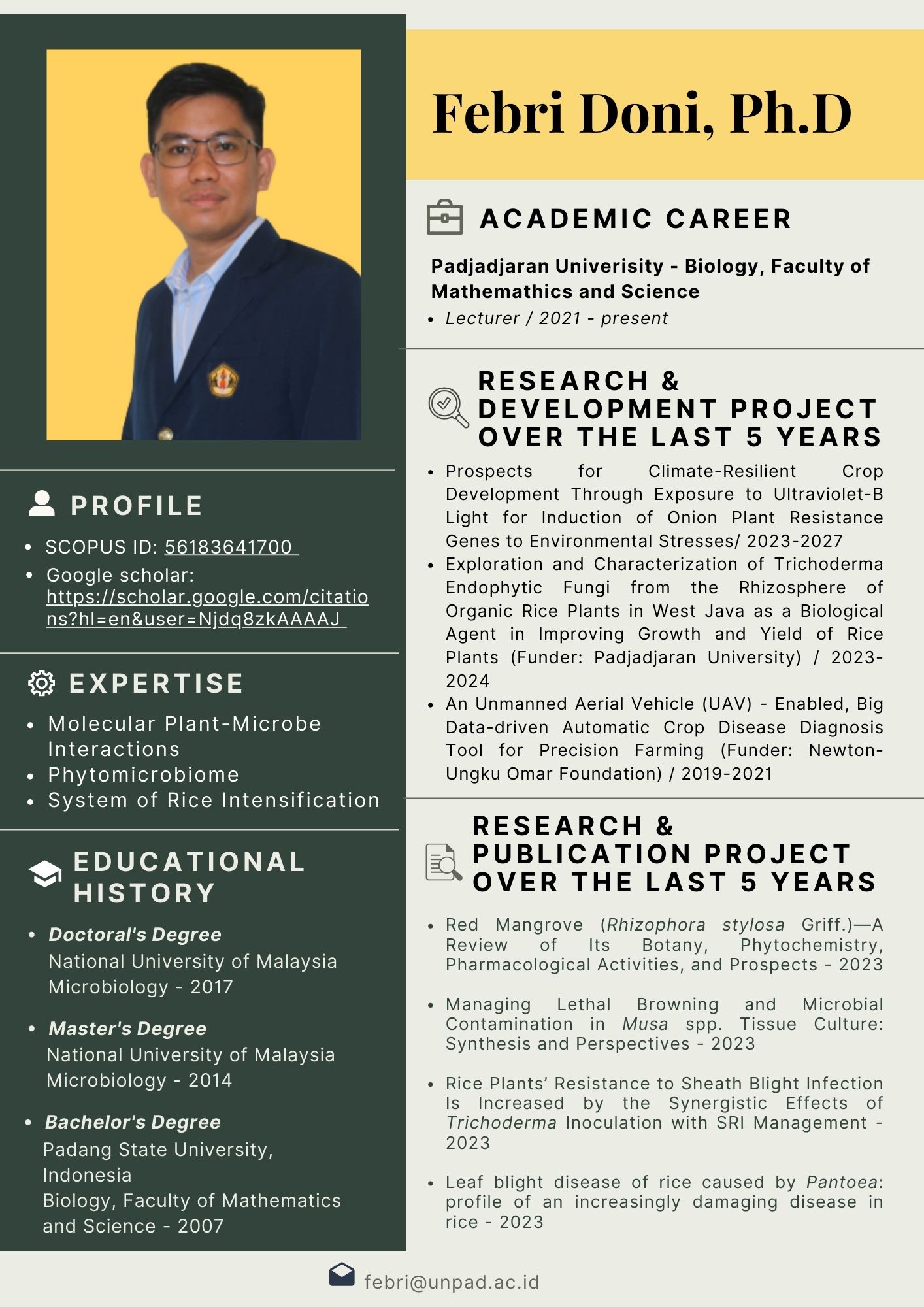
![[Biodata]](https://biologi.unpad.ac.id/wp-content/uploads/2023/10/Pak-Rusdi.jpg)